
Pilates-Based Rehabilitation in Coral Gables: How Pilates Fits Into Your Treatment Plan
Physical therapy is often associated with exercises designed to restore strength, mobility, and function after an injury or surgery. But rehabilitation doesn't always end when pain improves or basic movement returns. For some patients, Pilates can become a useful part of the rehabilitation process, helping build strength, stability, coordination, and body awareness as they progress.
Pilates-based rehab in Coral Gables combines principles of Pilates with physical therapy techniques to create exercises that can be adapted to an individual's condition, abilities, and treatment goals. Rather than treating Pilates as a replacement for physical therapy, it can be incorporated into a broader treatment plan when appropriate.
For patients recovering from an injury, surgery, or movement-related condition, Pilates may provide a structured way to continue building strength and control as they move through different stages of rehabilitation.
What Is Pilates-Based Rehabilitation?
Pilates is a form of exercise that emphasizes controlled movement, core strength, posture, balance, breathing, and body awareness. Physical therapists can adapt
these principles to support rehabilitation goals.
With pilates-based rehab in Coral Gables, exercises can be modified based on a person's current strength, mobility, pain levels, and stage of recovery. The goal isn't necessarily to perform advanced Pilates movements. Instead, exercises can be selected and adjusted to help address specific movement limitations.
A physical therapist may incorporate Pilates-based movements to work on areas such as:
Core stability
Balance
Postural control
Muscle strength
Coordination
Flexibility
Movement mechanics
Body awareness
Because exercises can be progressed gradually, Pilates may fit into different stages of a patient's treatment plan.
How Is Pilates Used Inside Physical Therapy?
Pilates can complement traditional physical therapy exercises rather than replace them.
During an evaluation, a physical therapist considers factors such as movement patterns, strength, flexibility, balance, pain, and functional limitations. Based on those findings, the therapist can determine whether Pilates-based exercises may be appropriate.
For example, a patient working on core stability may begin with simple, controlled movements and progress toward more challenging exercises as their strength and control improve.
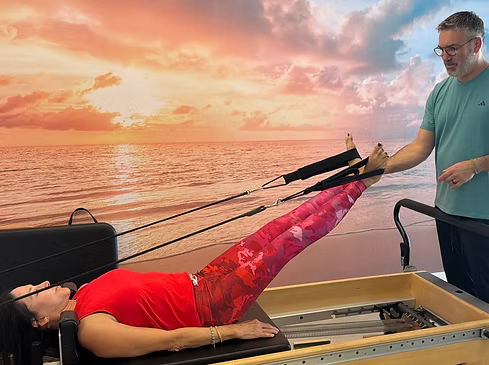
Pilates physical therapy in Coral Gables may incorporate equipment-based or mat-based exercises depending on the patient's needs and the resources available.
The important factor is that exercises are selected with rehabilitation goals in mind. A movement that is appropriate for one person may not be appropriate for another, which is why individualized instruction is important during rehabilitation.
Building Core Stability During Rehabilitation
Core stability is an important component of many rehabilitation programs. The muscles around the abdomen, pelvis, back, and hips contribute to stability and help support controlled movement.
Core stability rehabilitation in Miami may involve exercises that help patients develop better control of these muscles while performing everyday movements or more demanding activities.
Pilates-based exercises can emphasize controlled movement and maintaining alignment while the body moves. This can make them useful for patients who are ready to progress beyond basic strengthening exercises.
For example, a rehabilitation program might begin with simple exercises focused on activating and controlling the core. As the patient becomes stronger, exercises can become more dynamic and require greater coordination.
The progression should be based on the individual's condition and treatment goals rather than a predetermined exercise routine.
Do You Need to Be Fit or Flexible to Start?
No. Pilates is not only for people who are already strong, flexible, or experienced with exercise.
In a rehabilitation setting, exercises can be modified to match a patient's current abilities. Someone recovering from an injury may begin with simple movements and gradually increase the difficulty as their strength and mobility improve.
This is one of the reasons Pilates can fit into rehabilitation. Exercises can be adjusted by changing the range of motion, resistance, positioning, repetitions, or level of difficulty.
The objective is not to perform an exercise perfectly on the first attempt. Instead, the focus is on controlled movement and gradual progress.
When Is Pilates Added to a Treatment Plan?
There isn't one specific point in recovery when Pilates should be introduced.
A physical therapist may incorporate Pilates-based exercises early in rehabilitation when appropriate, while other patients may benefit from them later as they develop more strength and mobility.
The timing depends on factors such as:
The type of injury
Current symptoms
Strength and mobility
Surgical restrictions
Functional goals
Overall recovery progress
Tolerance for exercise
For some patients, Pilates may be introduced as a way to progress an existing exercise program. For others, traditional therapeutic exercises may remain the primary focus until they are ready for more advanced movement.
A physical therapist can determine when and how Pilates fits into the overall treatment plan.

Pilates After Surgery
After surgery, rehabilitation generally follows specific precautions and progression guidelines. Certain movements may be restricted during the early stages of recovery, depending on the procedure.
This means Pilates exercises should not automatically be considered appropriate simply because they are low-impact.
When pilates-based rehab in Coral Gables is used after surgery, exercises should be selected and modified according to the patient's surgical restrictions and recovery timeline.
A physical therapist can help determine which movements are appropriate and when exercises can safely become more challenging.
The focus may initially be on restoring basic mobility and function before gradually progressing toward strength, stability, and more complex movement.
From Rehabilitation to a Post-Rehab Pilates Program
Reaching the end of formal physical therapy doesn't necessarily mean you're finished working on strength and movement.
For some patients, transitioning into a post-rehab Pilates program can provide a way to continue exercising while maintaining the progress made during rehabilitation.
The transition should be gradual and appropriate for the individual's goals.
A post-rehab program may focus on:
Maintaining strength
Improving core stability
Supporting mobility
Developing movement awareness
Improving balance and coordination
Building exercise consistency
The goal is to move from rehabilitation-focused exercises toward a sustainable fitness routine without losing sight of the movement principles developed during treatment.
How Do You Move From Rehab Into Private Pilates?
The transition from physical therapy into private Pilates depends on the individual's condition, goals, and progress.
A patient may first work with a physical therapist to address pain, mobility limitations, weakness, or other functional concerns. As those issues improve, the exercise program can become more focused on maintaining strength and developing overall movement capacity.
At that point, private Pilates may become an option for continued exercise.
Communication between the rehabilitation provider and Pilates instructor can be helpful during this transition. Understanding the patient's previous limitations and current goals can help ensure the exercises remain appropriate.
For someone transitioning from rehabilitation, the objective isn't simply to move into a more advanced workout. It's to build on the progress already made.
Benefits of Incorporating Pilates Into Rehabilitation
When appropriately selected and supervised, Pilates-based exercises may support several aspects of rehabilitation.
Potential areas of focus include:
Improved core control: Exercises can emphasize stability and controlled movement.
Better body awareness: Patients may become more aware of posture, alignment, and movement patterns.
Progressive strengthening: Resistance and exercise difficulty can be adjusted as strength improves.
Improved coordination: Controlled movements can challenge coordination and balance.
Functional movement: Exercises can help patients develop control that carries over into everyday activities and physical pursuits.
These benefits don't mean Pilates is appropriate for every patient or every condition. A personalized assessment is important when determining whether it should be part of a treatment plan.
Choosing Pilates-Based Rehabilitation in Coral Gables
If you're considering Pilates as part of your recovery, look for an approach that connects exercise to your specific rehabilitation goals.
A qualified professional can help determine:
Which exercises are appropriate
How much resistance to use
What movements should be modified
When exercises can be progressed
How Pilates fits alongside other treatment
When you're ready for independent or private Pilates
The emphasis should remain on safe progression, proper movement, and exercises that support your individual needs.
For patients in South Florida, pilates-based rehab in Coral Gables can offer a structured approach to building strength and movement control while progressing through rehabilitation.

Frequently Asked Questions
How is Pilates used inside physical therapy?
Pilates can be incorporated into physical therapy through controlled exercises focused on strength, stability, balance, coordination, posture, and movement awareness. A physical therapist can modify exercises based on the patient's condition and rehabilitation goals.
Do I need to be fit or flexible to start?
No. Pilates exercises can be modified for different fitness levels and abilities. In a rehabilitation setting, exercises are generally selected based on the individual's current strength, mobility, symptoms, and treatment goals.
When is Pilates added to my treatment plan?
The timing varies from person to person. Pilates may be introduced at different stages of rehabilitation depending on the injury, symptoms, surgical restrictions, strength, mobility, and overall progress.
How do I move from rehab into private Pilates?
The transition typically happens as rehabilitation goals are met and the patient is ready for a more independent exercise program. A physical therapist and Pilates instructor can help determine which exercises are appropriate as the focus shifts from rehabilitation toward ongoing fitness and movement.
Is Pilates-based rehab safe after surgery?
Pilates may be incorporated after surgery when appropriate, but exercises should follow the patient's surgical restrictions and recovery timeline. A physical therapist can determine which movements are appropriate and how they should be progressed.


Comments